
So, You’ve Decided to Domesticate a Giant Terrestrial Shrimp: A Survival Guide
Let’s be honest: cats are independent, dogs require emotional stability you might not possess, and goldfish lack ambition. It’s no wonder more and more modern households are opening their doors to the noble, giant terrestrial decapod.
However, transitioning a 40-pound apex scavenger from the untamed wild to your living room carpet isn’t all sunshine and kelp treats. Without proper structure, your dream of a cozy crustacean companion can quickly turn into a chaotic game of “Is that my couch, or is my shrimp nest-building?”
Here is our definitive, totally sensible guide to civilizing your giant pet shrimp—and how the right gear can turn a wild decapod into a household darling.
Step 1: Establish Boundaries (Before They Establish Theirs)
When a young giant shrimp enters a new environment, its instinct is to test everything with its pincers. Doors, baseboards, mammalian pets, family heirlooms—if it exists in 3D space, your shrimp will try to chew it to see if it’s edible.
During the tricky adolescent “teething” phase, free-roaming is a recipe for disaster. The secret to early domestication is containment without isolation.

Pro Tip: Keep your pet close without sacrificing your household upholstery. Slip them into the ShrimpSack® by ShrimpLeash™. Its bite-resistant 1000D ballistic mesh keeps busy mandibles away from your furniture, family pets, and children’s ice cream cones while giving your growing shrimp a front-row seat to human family life.
Step 2: The Art of the Daily “Walkies”
A bored giant shrimp is a destructive giant shrimp. To truly integrate a decapod into suburban life, regular exercise is non-negotiable. Walking your shrimp lets them burn off nervous energy, explore sensory stimuli, and learn that the mail carrier is not a rival predator.
Of course, walking an animal with ten legs and an unpredictable tail-flip reflex requires specialized gear. Standard dog leashes will pinch delicate carapace membranes or slip right off during a sudden 10-foot backward leap.

- For Everyday Strolls: The Original ShrimpLeash™ features decapod-ergonomic webbing that sits comfortably across the cephalothorax, giving you complete control over sudden backward leaps while keeping pressure off delicate gill structures.
- For Hot Summer Days: Remember, asphalt burns sensitive walking legs! On sweltering afternoons, opt for the ShrimpStroll® Jogging Stroller, allowing your decapod to ride along in shaded, suspended comfort without risking their appendages on hot pavement.
Step 3: Socialization & Family Integration
True domestication means teaching your giant shrimp to share its space. Once your pet understands that your home isn’t an open-pit buffet, it’s time to introduce family activities.
If your decapod has reached adulthood and started a family of its own, keeping five lobster-sized juveniles organized during park visits can feel like herding cats—if cats had hard exoskeletons and antennae.
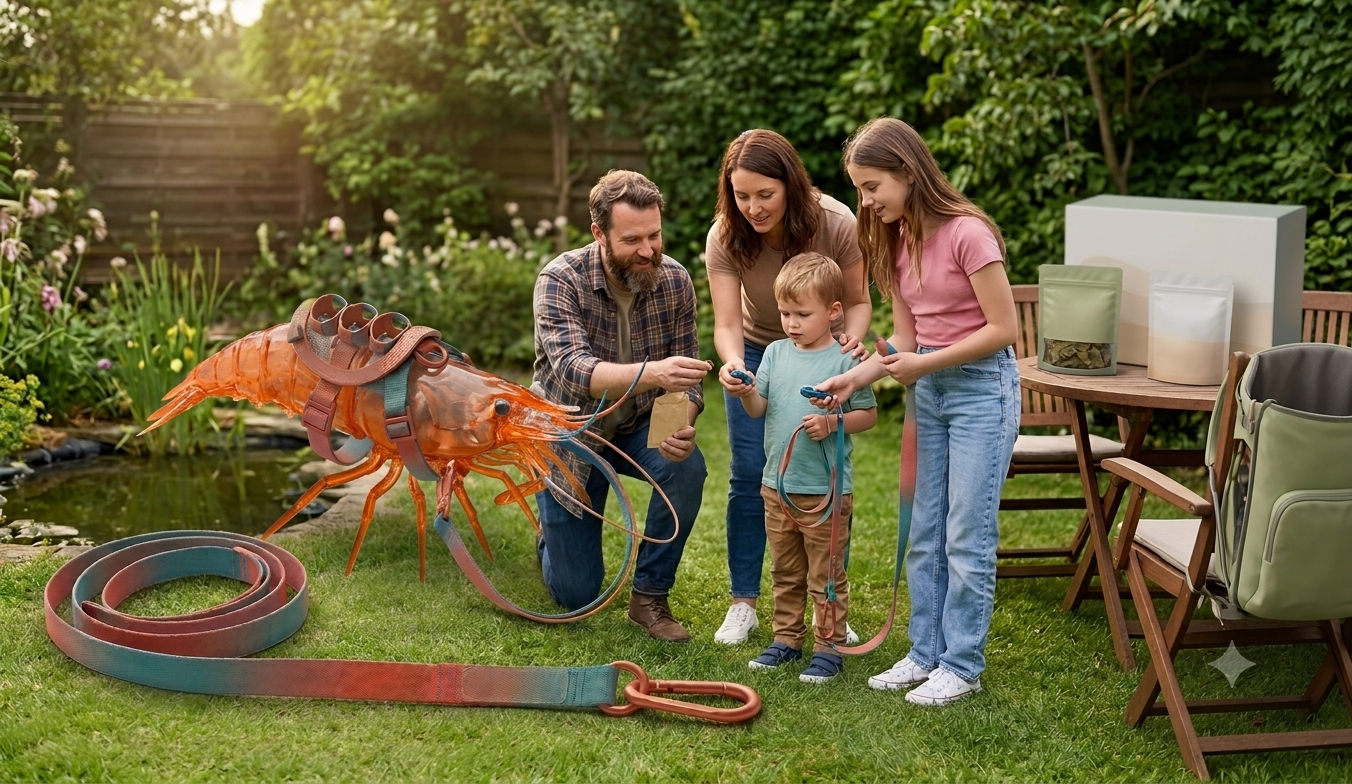
Equipping your giant shrimp with the BroodSaddle® Pro transforms chaotic family outings into an organized parade. By securing up to five juveniles in individual, ultra-soft micro-cradles directly over the parent’s center of gravity, you encourage natural brooding instincts while keeping the park safe from an army of roving baby crustaceans.
The Bright, Crustacean-Friendly Tomorrow
Domesticating a giant terrestrial shrimp takes patience, mutual respect, and a willingness to explain to your neighbors why there’s a 30-pound prawn sitting on your porch. But with the right routine—and the heavy-duty, marine-grade reliability of ShrimpLeash™ Pet Gear—your pet will go from wild bottom-feeder to the most beloved (and structurally secure) member of the family.
Ready to civilize your decapod? Explore the full ShrimpLeash™ line today—because a secure shrimp is a happy shrimp!